

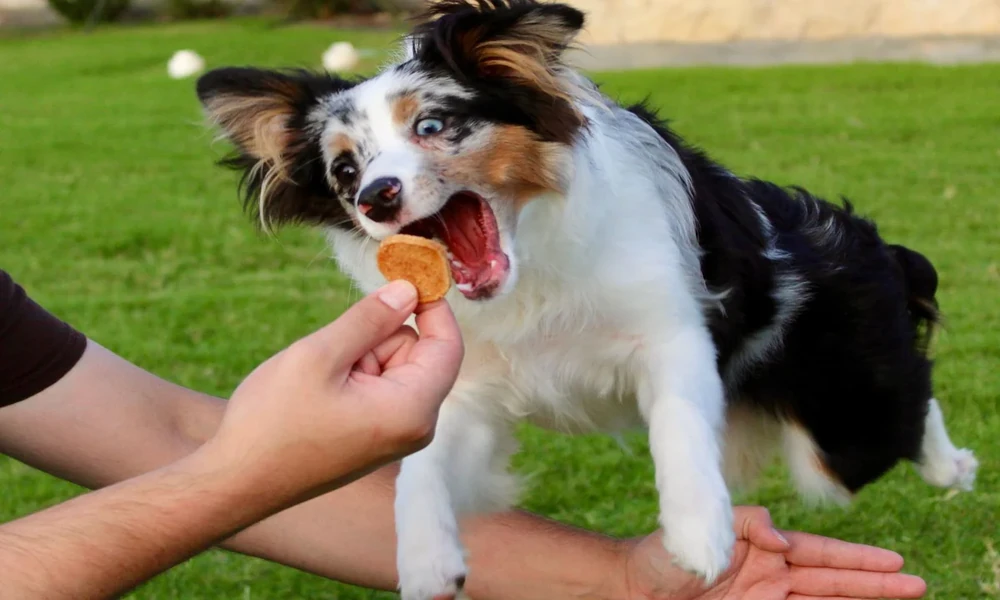
Training treats are a tool, and like any tool, their effectiveness depends on how they’re used rather than just what they are. A high-quality treat used poorly produces worse training outcomes than a modest treat used with good timing and appropriate reinforcement strategy.
Timing Is Everything
dog training treats work best when delivered within one to two seconds of the desired behavior. Dogs associate rewards with what they were doing at the moment of reward delivery – a treat that arrives three seconds late may reinforce the dog looking away or sitting down rather than the behavior you intended to mark.
The Karen Pryor Academy – one of the most rigorous training education programs available – teaches timing as the foundational skill of reward-based training. A clicker or marker word used to mark the behavior precisely, followed by the treat, bridges the gap between the behavior and the reward and makes the timing more forgiving in practice.
Treat Value Hierarchy
Experienced trainers maintain a hierarchy of treats – low, medium, and high value – and match the treat to the training challenge. Easy, known behaviors in low-distraction environments get low-value treats. New behaviors, proofing in distracting environments, and impressive performances get high-value rewards. This prevents treat inflation and preserves motivational value.
Fading Treats Properly
The goal of treat-based training is behavior that becomes reliable regardless of whether a treat is present. Fading treats – gradually moving from every-repetition reinforcement to intermittent reinforcement – should happen after the behavior is reliable, not before. Intermittent reinforcement actually strengthens behavior once it’s established – it’s how slot machines maintain engagement, applied ethically to dog training.
