

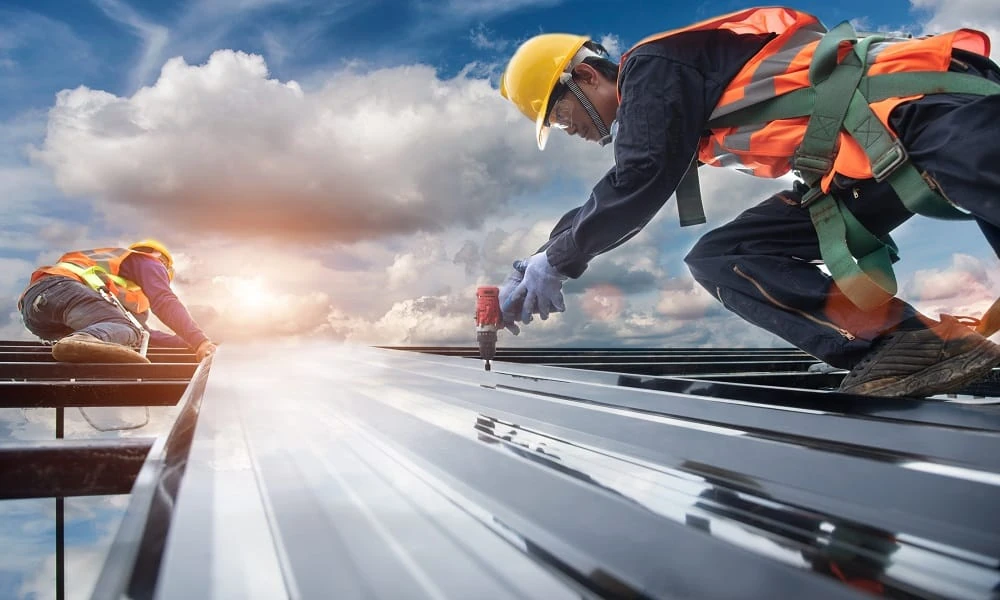
Eleven named storms in a single Gulf season is not a scare tactic. It is a Tuesday in Louisiana. And the roof over your head is the one upgrade you cannot test-drive before the wind arrives.
If you own a home between the Comite River and the Amite, you already know the deal. Your roof takes direct fire from sun, sideways rain, and whatever the Gulf decides to throw north. The right roof handles that abuse for decades. The wrong one starts leaking two summers after install. This guide walks you through how to tell the difference, which materials actually hold up here, and how to vet the crew doing the work.
What Baton Rouge Weather Does to a Standard Roof
Start with the forces. Baton Rouge sits close enough to the Gulf that tropical systems routinely push bands of wind and rain this far inland, and the National Weather Service issues regular watch and warning products for the region all season long. Uplift is the real killer. Wind does not tear a roof off from the top, it gets under the edges, lifts the field, and peels it back like the lid of a tuna can.
Then add the sun. Long, humid summers cook shingles from above while trapped attic heat cooks them from below. That cycle of expanding and contracting makes old shingles brittle, and brittle shingles crack instead of flexing when a gust hits. You can see it on your own house. Walk your yard after a dry spell and look at the ground along the drip edge. A scattering of dark grit means the granules are gone and the asphalt underneath is next.
Humidity matters too, but quietly. It creeps into the attic through gaps, condenses on the decking, and rots the wood under a roof that looks perfectly fine from the street. That is the part most homeowners miss, and it is why attic ventilation belongs in every conversation about a new roof.
Shingle, Metal, or Something Fortified?
Here is the honest breakdown, ranked by how well each option handles our specific climate.
- Architectural asphalt shingles. The default for good reason. Affordable, easy to repair, and available in wind ratings that meet modern code. Expect 15 to 25 years here, not the 30 on the wrapper, because of heat and humidity.
- Standing seam metal. My pick if you plan to stay in the house. It sheds debris, reflects heat, and holds up to wind far better than shingles. You pay more up front and get it back in longevity and lower cooling costs.
- Fortified assemblies. This is the one I would push hardest for anyone within reach of the coast. The FORTIFIED program from the Insurance Institute for Business & Home Safety sets standards for sealed roof decks, reinforced edges, and better attachment. A sealed deck means that if a shingle tears loose, the rain still cannot pour straight into your living room.
- Clay tile and slate. Beautiful, heavy, expensive. On the right house they last generations, but your framing has to be engineered for the load.
- Flat TPO membrane. Only relevant if you have a low slope section. Do not let anyone talk you into shingles on a flat roof.
The roof deck matters as much as the surface. Ask any contractor what they plan to do about the underlayment and deck attachment, and watch their face. The ones who light up are the ones you want.
A Four-Step Walkthrough Before You Sign Anything
You do not need to become a roofing expert. You need a process that keeps you from getting burned. Use this one.
- Get the scope in writing, line by line. Tear-off, deck inspection, underlayment type, ice and water shield at valleys, flashing, ventilation, and cleanup. A quote that says “new roof” and nothing else is not a quote, it is a wish.
- Ask for the manufacturer designation. If the installer is factory certified, the shingle warranty gets stronger and often longer. Ask to see it in writing and verify it yourself.
- Check the insurance conversation early. If this is storm damage, call your carrier before you sign a contract. Louisiana has specific rules about how storm claims are handled, and signing first can complicate everything.
- Watch the crew on day one. Are they tearing off in sections instead of stripping the whole house at once? Are they tarping your plants and hauling magnets across the lawn for nails? That tells you everything about how they will treat the job on day four.
The magnet sweep, by the way, is not a small thing. A single missed roofing nail in a driveway means a flat tire. Good crews do two passes without being asked.
Materials Alone Do Not Save You. Installation Does.
This is where most homeowners get the math wrong. They shop shingle brands like they are buying a car and ignore the person doing the nailing. The National Institute of Standards and Technology has studied how wind interacts with low-slope and residential roof systems for years, and the through-line in that body of work is consistent: how a roof is attached and how its edges are detailed determines whether it stays put.
Translation for your Saturday morning: a premium shingle installed badly will fail faster than a mid-grade shingle installed right. Nail placement, nail depth, and edge metal are not details. They are the roof.
So when you interview contractors, stop asking what brand they use. Ask what happens at the ridge and at the eaves, and ask them to show you a house they finished a year ago. Then drive by it. Any crew worth hiring will hand over an address without hesitating.
That vetting standard is exactly why homeowners in this parish end up searching for trusted residential roofers in Baton Rouge rather than grabbing the first yard sign they see after a storm. The good ones have a paper trail and an address list. The storm chasers have a truck and a decal.
Red Flags That Should End the Conversation
A few things tell you to walk away, and they are not subtle.
- Any pitch for a full replacement on a roof that is clearly repairable, or the reverse.
- A demand for full payment up front. Deposits for materials are normal. The whole job, up front, is not.
- No physical local address, no license number on the paperwork, or a phone number that only answers during storm season.
- Pressure to sign the same day because “prices go up tomorrow.”
I have a bias here, and I will own it. I would rather pay a local crew more and wait three weeks for their calendar to open than hand my roof to someone who knocks on my door the day after a named storm. One of those people answers the phone when something goes wrong in year five. The other one is three states away.
The Money Question
Replacement here is not cheap, and anyone quoting you a single flat number for every house is guessing. Two homes on the same street can differ by thousands of dollars based on pitch, square footage, layers of existing shingles, and whether the deck needs new wood. That is normal, and it is fine. What you want is a detailed estimate that shows where every dollar goes, not a lump sum that leaves you guessing.
Also factor in what a fortified roof does to your insurance picture. Discounts vary by carrier and by how the assembly is certified, so ask your agent directly before you choose materials. That one phone call can shift the whole calculation.
What to Do This Week
If your roof is more than fifteen years old, do these three things before the next storm gets a name. Climb into the attic on a sunny day and look for daylight poking through the deck. Walk the perimeter and note any loose or lifted shingles. Then call two local companies for an inspection and compare what they tell you. If their diagnoses match, you have your answer. If they do not, you just learned which one to avoid.
Your roof is the only thing standing between a wet Gulf evening and your living room ceiling. Treat the selection process like it matters, because it does. And the next time the radar lights up red, you will be the house on the block that sleeps through it.
