

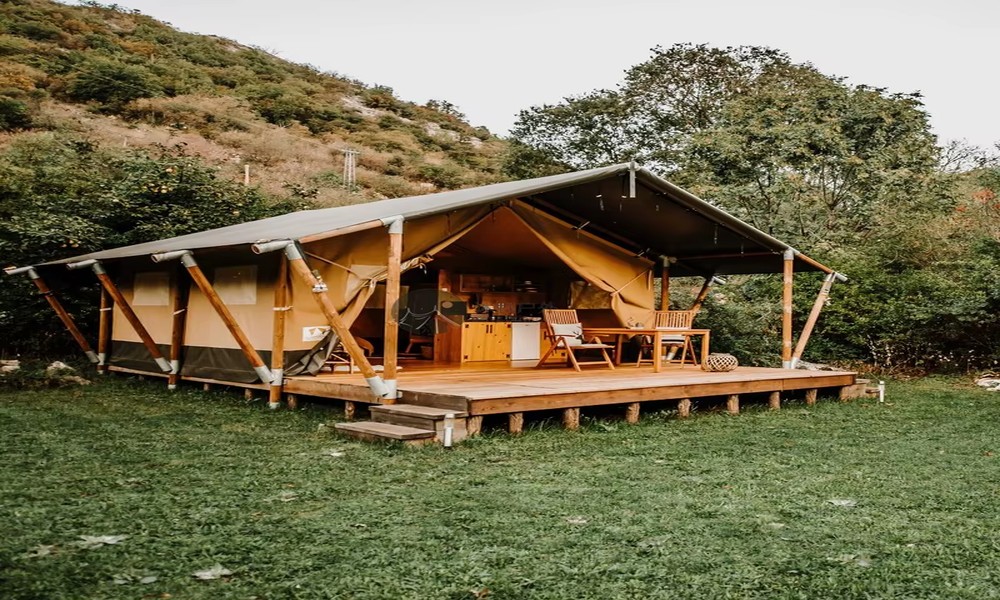
Glamping has long been more than just a simple canvas tent. Many guests expect comfort, privacy, and thoughtful design, while still staying close to nature. For campground owners, eco-lodge operators, and hospitality developers, this raises a practical question: how can you quickly add high-quality accommodations without lengthy construction processes?
Safari lodge tents are a strong solution. They combine the appeal of a unique overnight stay with the operational benefits of modular units. Below is a practical guide to choosing the right setup.
Why safari lodge tents work
With proper planning, safari lodge tents can support premium rates, improve reviews, and extend the season.
– Guest experience: They’re photogenic, feel adventurous, and stand out on booking platforms.
– Comfort options: Many layouts offer real beds, private bathrooms, kitchenettes, and a covered veranda.
– Quick setup: Compared to cabins, installation is often faster and less disruptive.
– Flexible scaling: Start with a few units and expand once demand is proven.
What to Look for Before You Buy
Materials and Construction
Ask about UV resistance, waterproofing, and how the structure withstands wind and heavy rain. In challenging climates, the choice of materials directly determines maintenance requirements and guest satisfaction.
Layout and capacity
Tailor the layout to your target audience. Families often benefit from separate sleeping areas, while couples appreciate an open, suite-like layout. Don’t forget practical storage space for housekeeping and luggage.
Comfort and amenities
Plan early for electrical, water, drainage, and ventilation systems. If you want an en-suite bathroom, check how the plumbing will be installed and whether a raised floor is necessary. In warm regions, airflow and shade are crucial; in cooler seasons, insulation and safe heating options are key.
Safety and Compliance
Depending on your region, fire-retardant materials, minimum distances between units, or permits may be required. Even if regulations are limited, proper anchoring, high-quality flooring, and secure doors ensure less risk and greater comfort.
A simple project approach
A smooth rollout typically follows these steps:
- Site assessment, including wind direction, drainage, accessibility, and sightlines.
- Concept and floor plan, including layout, privacy, and walking routes.
- Configuration, including dimensions, veranda style, interior options, and finishes.
- Production and delivery tailored to your seasonal schedule.
- Installation and aftercare, including maintenance routines and spare parts.
Working with a supplier who understands hospitality projects prevents costly retroactive modifications. With specialists for safari tents, you can also view proven configurations designed for resorts and eco-lodges.
Safari lodge tents fit into many concepts:
– Eco-lodges seeking low-impact accommodations with a premium look
– Campgrounds looking to scale up from basic sites to higher-margin units
– Boutique locations wanting to add a small number of striking suites
– Nature areas offering an immersive experience without heavy construction
A common approach is a compact cluster of three to five units. This allows you to test pricing and operations, and scale up once housekeeping, occupancy, and feedback are stable.
Key Points
Treat safari lodge tents as a hospitality product, not as a standalone tent purchase. Choose materials suited to the climate, design layouts that cater to your guests, and work with a clear installation plan. Select suppliers early on and request specifications so that the design, amenities, and planning align seamlessly.
