

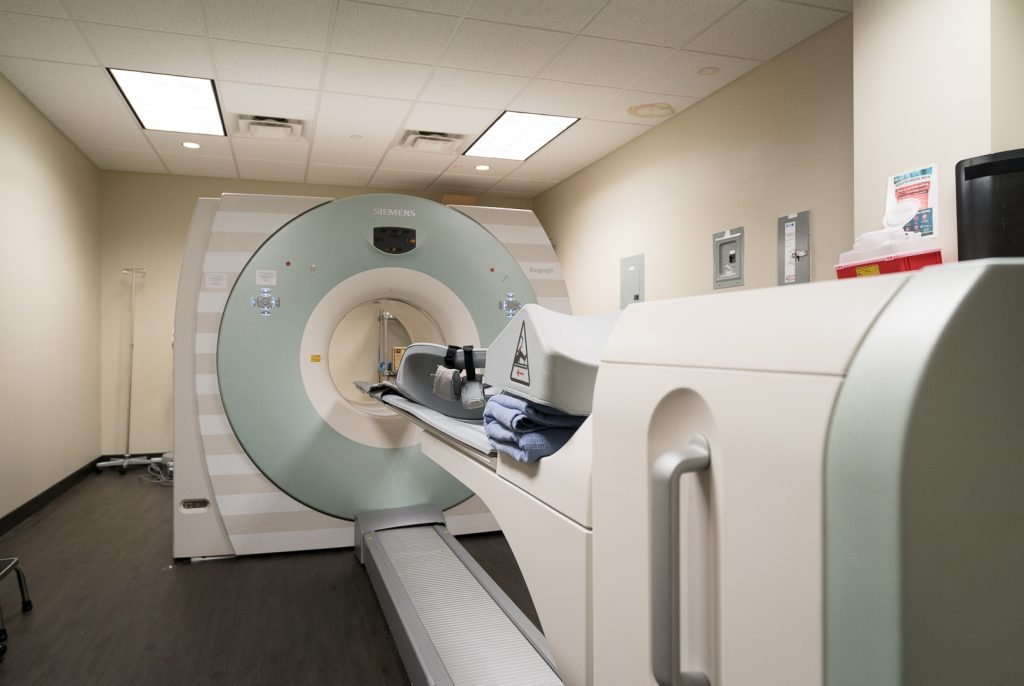
In recent years, the need for both prevention and diagnosis through the aid of imaging methods has increased among persons who wish to gain detailed insights about their health. In cities such as Dallas, the MRI scan by Papillon and the computed tomography (CT) scan share the characteristic of delivering detailed insights about the internal structure of the body. However, these devices differ greatly in terms of the underlying principles and the needs a patient should be aware of.
How MRI and CT Scans Work?
Magnetic Resonance Imaging (MRI) employs strong magnetic fields and radio waves to produce detailed pictures of internal body parts, including organs and soft tissues. Unlike many other diagnostic techniques, MRI does not make use of any kind of irradiation. Instead, it utilizes the hydrogen atoms present inside the body and works on the principle of how the body responds to magnetic fields.
A Computed Tomography (CT) scan is another imaging method that uses X-ray technology together with computer processing to produce detailed images of bones, organs, and blood vessels. For this purpose, the scanner moves around the body, capturing a series of X-ray images from specific angles. The basic difference is that, while MRI employs magnetic fields, CT uses radiation. This has implications for how each is used and how the patient makes a decision.
Radiation Exposure and Safety Considerations
Perhaps the most discussed differences between MRI scans and CT scans are their differences with respect to radiation exposure. CT scans use ionizing radiation, which, though it is recognized to be safe under medical necessity situations, contributes to cumulative doses of radiation exposure.
MRI scans, however, do not require the use of ionizing radiation. It is a good option in specific situations. Young people and long-term monitoring are more suitable for MRI scans. However, MRI scans are not appropriate for all individuals. Some may face limitations due to the presence of devices in their body and because of claustrophobia.
It goes without saying that both imaging techniques are considered safe for those with proper medical supervision, and they are often chosen based on individual diagnostic needs.
Image Detail and Diagnostic Strengths
MRI has been highly effective in visualizing soft tissues. It is usually applied to visualize different body organs, including the brain, spinal cord, muscles, and ligaments. The major advantage of MRI lies in its higher tissue contrast, enabling it to visualize abnormal conditions not easily visualized through CT scans.
CT scans are good for imaging bone structures, detecting fractures, lung-related issues, and acute bleeding. In emergencies, CT scans are preferred over MRI scans. It takes only a few minutes for the CT scan to be done, whereas an MRI scan may take longer, depending on the area to be scanned.
In some cases, the level of detail required might determine what type of imaging is required. For example, soft tissue injuries might require an MRI, and trauma assessment might require a CT.
Cost, Accessibility, and Time
Moreover, various cost factors may be involved. Generally, CT scans are cheaper and more accessible than MRI scans. CT scans are usually performed in the ER, so they produce results quickly.
MRI scans are more time-consuming, and there may be longer wait periods during the scheduling of the exam. There is also the requirement of staying still in the confined space of the machine during the long procedure, which may not be comfortable for some people. Generally, healthcare providers will take such considerations into account while deciding on one modality over the other.
Making an Informed Choice
Deciding which between MRI and CT scan imaging is used is usually never a matter of personal preference, but a decision based on symptoms, history, emergency status, and structures involved, among other factors. Both continue to have significant positions in shaping dialogue regarding preventive health care, as witnessed in Dallas.
Ultimately, appreciating the distinctions between these forms of imaging helps individuals become more participatory in discussions regarding their care. When determining if an individual needs a CT scan or an MRI scan by Papillon in relation to investigations concerning soft tissue, the role of informed decision-making proves integral.
